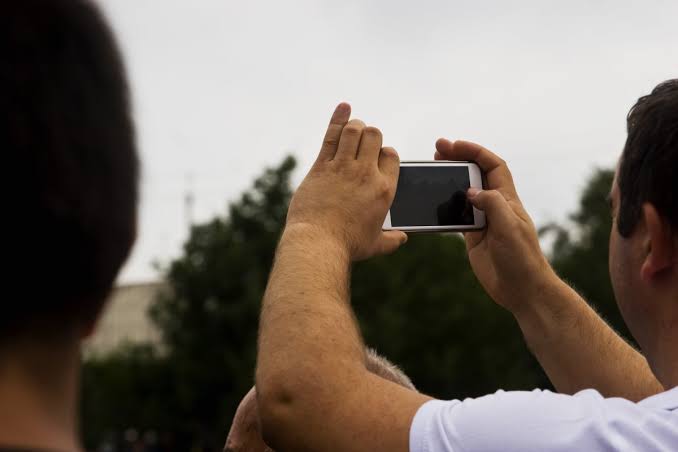
Pulling out your phone and pressing record during an argument, meeting or phone call may seem harmless — but when does recording someone without telling them become illegal?
In South Africa, the answer is more complicated than simply saying “you need their permission.”
The country's Regulation of Interception of Communications and Provision of Communication-Related Information Act (RICA) generally prohibits the intentional interception of communications, but it contains an important exception for people who are themselves participants in the conversation.
Here's what you need to know.
Can you record a conversation you're part of?
Generally, yes.
Section 4 of RICA provides that a person who is a party to a communication may intercept that communication, provided they are not doing so for the purpose of committing an offence.
In simple terms, if you are having a conversation with another person, you can generally record your own conversation with them without obtaining their permission first.
For example, if you are speaking to someone on the phone and decide to record the call, RICA's one-party rule can allow you to do so.
The same principle can apply to a face-to-face conversation in which you are personally participating.
But there is an important limitation
The fact that you are legally allowed to record a conversation does not automatically mean you can do whatever you want with the recording.
There are separate legal considerations around privacy, personal information and how the recording is subsequently used or distributed.
What if you're recording a conversation you're NOT part of?
This is where things become very different.
If you leave your phone or recording device in a room and secretly record two other people having a private conversation, you generally cannot rely on the one-party exception because you aren't a participant in the communication.
RICA generally prohibits intentional interception of communications unless an exception in the Act applies.
So, for example, secretly placing a phone under a table to record two people talking while you are somewhere else could potentially amount to unlawful interception.
What about recording someone in public?
Simply being in a public place does not automatically mean that everything someone says can be freely recorded and distributed.
The circumstances matter.
There is an important distinction between recording something that is openly observable or audible in a public setting and secretly intercepting a private communication.
For example, filming a public protest is very different from secretly placing a recording device inside someone's home to capture a private conversation.
The context, expectation of privacy and purpose of the recording can all become relevant.
What does POPIA have to do with recordings?
The Protection of Personal Information Act (POPIA) is another piece of legislation that can become relevant.
POPIA regulates the processing of personal information and requires such processing to be lawful and reasonable and not to infringe the privacy of the person concerned.
A recording can contain personal information, particularly when a person can be identified through their voice, name, statements or other information contained in the recording.
However, POPIA should not simply be interpreted as meaning “you need permission before every recording.”
POPIA recognises several grounds for lawful processing besides consent, including certain contractual, legal and legitimate-interest grounds.
There are also exclusions and special rules depending on the circumstances and purpose of the recording.
Can you record your boss?
If you are personally participating in a conversation with your employer, RICA's one-party rule can generally permit you to record it without telling your employer.
This can become particularly relevant during disciplinary hearings, workplace disputes or discussions about employment matters.
However, whether you can use or distribute the recording, and whether it is admissible as evidence, are separate questions.
If you intend to rely on a recording in a labour dispute or court case, it is advisable to obtain legal advice rather than assuming that a lawful recording will automatically be accepted.
Can you record someone threatening you?
If you are personally involved in the conversation, RICA's one-party provision can generally allow you to record it.
This can be particularly important where the recording may help establish what was actually said.
However, recording someone does not give you permission to provoke them into making threats or commit another offence. RICA specifically excludes interception carried out for the purpose of committing an offence.
Can you secretly record someone else's phone call?
Generally, not simply because you want to know what they're saying.
If you aren't a participant in the communication and don't have the required legal authority or applicable exception, secretly intercepting someone else's call can potentially breach RICA.
This is very different from recording a phone call in which you are one of the participants.
Can you share the recording on WhatsApp or social media?
This is where people can get themselves into trouble.
Being allowed to make a recording does not necessarily mean you have an unlimited right to publish or distribute it.
Posting someone's private conversation on Facebook, TikTok, WhatsApp or another platform can raise separate privacy, defamation and personal-information issues depending on the circumstances.
For example, a recording made legitimately during a dispute does not automatically give you the right to upload the entire conversation publicly and expose someone's private information.
The purpose for which personal information is collected and subsequently processed is relevant under POPIA, which requires personal information to be collected for a specific, explicitly defined and lawful purpose in circumstances where POPIA applies.
What about recordings used as evidence?
A recording can potentially be useful evidence, but “I recorded it legally” and “the court will accept it” are not necessarily the same question.
The circumstances surrounding how the recording was obtained, its relevance, authenticity and other evidentiary considerations can matter.
For that reason, anyone considering using a recording in a court case, disciplinary proceeding or other formal dispute should consider getting legal advice.
The simple rule to remember
If you are part of the conversation, South African law generally allows you to record it without the other person's permission under RICA's one-party interception rule, provided you are not recording it for the purpose of committing an offence.
If you are not part of the conversation, secretly recording it is a very different matter and can potentially be unlawful.
And even when making the recording is lawful, sharing, publishing or otherwise processing the recording can create separate legal issues.
Bottom line
Can you legally record someone without their permission in South Africa?
Sometimes, yes.
If you're a participant in the conversation, RICA generally permits you to record it without obtaining the other person's consent.
But secretly recording conversations between other people, or publishing a recording containing someone's private information, can raise serious legal issues.
The safest approach is to consider three separate questions:
1. Am I a participant in the conversation?
2. Am I recording it for a lawful purpose?
3. What am I planning to do with the recording afterwards?
Those three questions can make the difference between a lawful recording and a potential privacy or interception problem.
This article provides general information about South African law and is not legal advice. Laws and their interpretation can change, and specific circumstances may produce a different legal outcome.