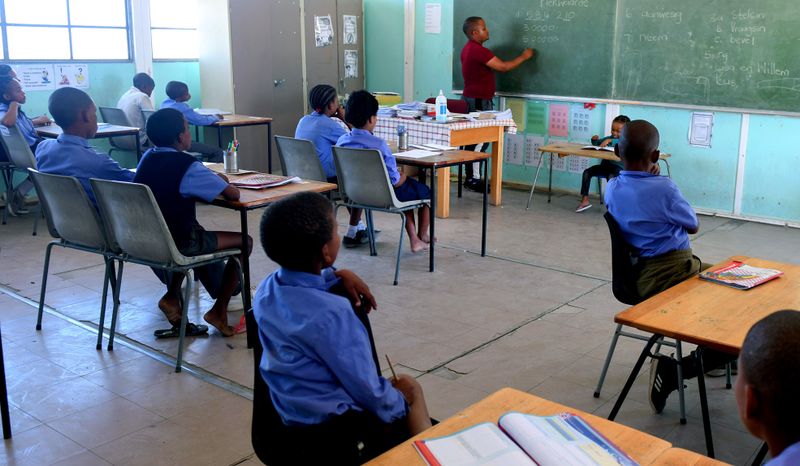
Makhanda, Eastern Cape - Public schools across the Eastern Cape have secured a significant legal victory after the Eastern Cape High Court in Makhanda declared the provincial Department of Education’s school-funding decisions between 2020 and 2025 unconstitutional, unlawful and invalid.
The judgment follows a legal challenge brought by the Makhanda Circle of Unity and the governing bodies of Ntsika Secondary School, Hoërskool PJ Olivier and Tantyi Lower Primary School, represented by the Legal Resources Centre (LRC).
At the centre of the case was the province’s failure to consistently fund schools at the national per-learner minimum set under the National Norms and Standards for School Funding.
Since 2020, schools in the province — particularly no-fee schools serving poorer communities — received substantially less than the national target. In 2021/22, for example, no-fee schools were supposed to receive R1,455 per learner but Eastern Cape schools received only R766, while the following year the national target increased to R1,536 and the province allocated only R815 per learner.
The situation changed in 2023, when the department announced that schools would be funded at the national target. However, schools subsequently discovered that the department intended to retain 33.75% of their per-learner allocations under a newly established Provincial National Norms and Standards for School Funding budget.
The LRC argued that the department could not simply retain money allocated to individual schools and decide centrally how it should be spent. The organisation said the withheld funding was intended for basic educational needs, including textbooks, learning and teaching support materials, maintenance and other essential school expenses.
The court's final order now places significant obligations on the provincial department.
Unless it develops and complies with a lawful funding plan meeting the applicable requirements, schools must receive at least the national minimum amount allocated for each learner.
The judgment also reinforces the role of school governing bodies and individual schools in determining how their allocated funds should be used. The department cannot simply take a portion of a school's allocation and spend it on its behalf without following the law.
Three-monthly reporting ordered
The Eastern Cape Department of Education has also been ordered to report to the court every three months for the next year on its compliance with the order.
Among other things, the department must demonstrate the steps it is taking to ensure that schools receive the correct allocations for the 2027/28 financial year, calculated according to each school's quintile and number of enrolled learners.
The case has broader implications because the dispute exposed the consequences of provincial education departments funding schools below the national targets. The LRC previously described the Eastern Cape situation as systemic underfunding, with some schools receiving only about half of the amount regarded nationally as necessary.
The funding dispute also highlighted the particular vulnerability of no-fee schools. Unlike fee-paying schools, Quintile 1 to 3 schools generally cannot rely on school fees to make up funding shortfalls. The per-learner allocation is therefore critical for everyday expenses and educational resources.
The legal challenge was launched in 2023 after attempts to obtain answers from the department failed to resolve the concerns. The case ultimately placed the province's school-funding practices under judicial scrutiny.
For the Makhanda schools and the communities supporting them, the judgment represents more than a dispute over budgets. It establishes that funding decisions affecting learners' access to basic education must comply with constitutional and statutory requirements.
The LRC welcomed the outcome, while crediting the Makhanda Circle of Unity and the governing bodies of the three schools for pursuing the matter.
The ruling could now force a significant change in how the Eastern Cape approaches school funding — particularly for schools serving some of the province's poorest learners.
The message from the court is clear: money allocated for learners must reach schools in accordance with the law, and provincial authorities cannot simply decide to withhold it.