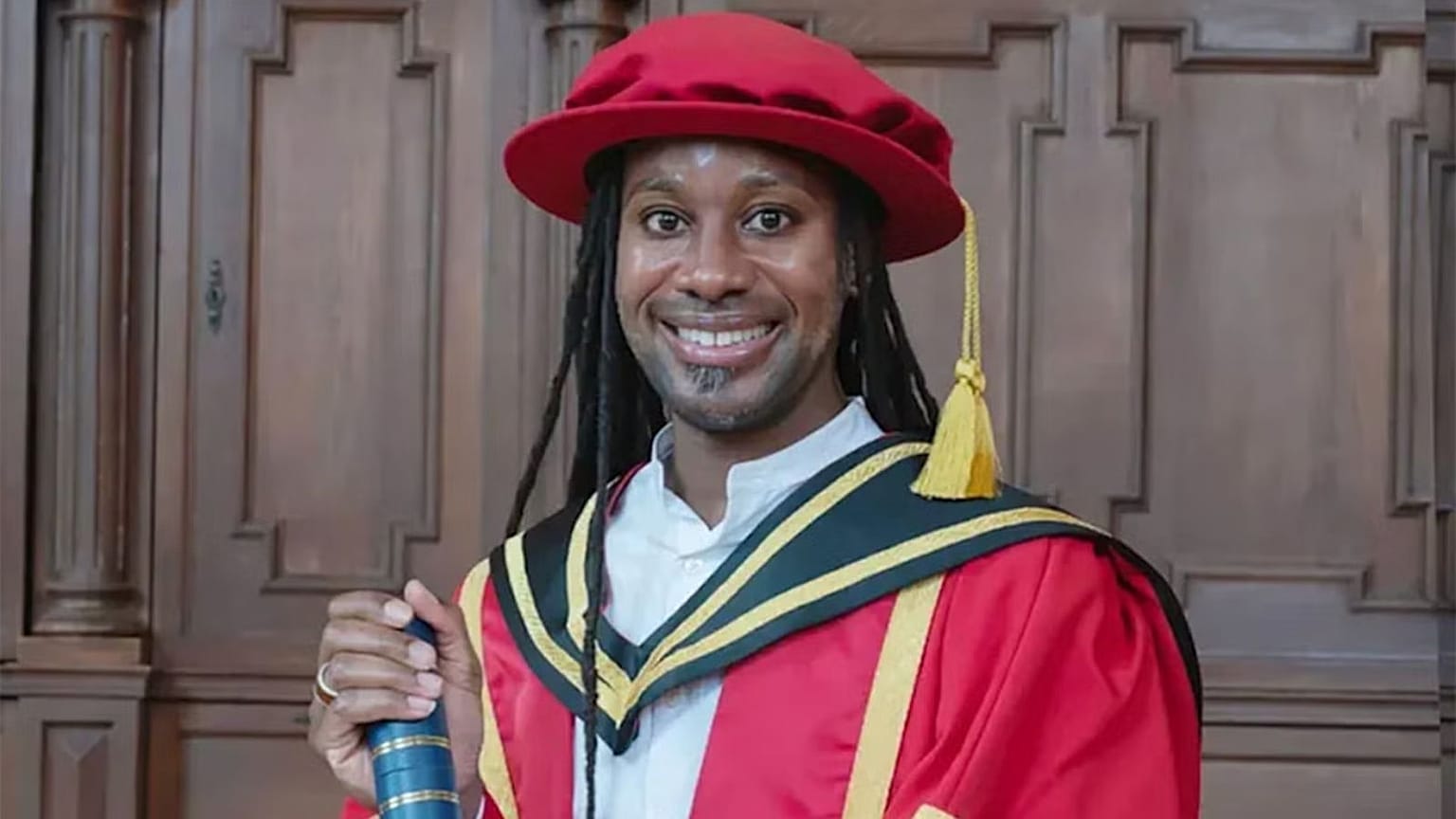
British academic Jason Arday, who made history as the University of Cambridge’s youngest Black professor, has been found dead in south London, just days after resigning from the prestigious university amid intense scrutiny over allegations concerning his academic work and career.
Arday, 41, was found unresponsive at an address in Battersea on Friday afternoon, 14 August 2026. Emergency services pronounced him dead at the scene.
The Metropolitan Police said the death was being treated as unexpected but was not believed to be suspicious. His next of kin have been informed and are being supported by officers. (Reuters)
From extraordinary beginnings to Cambridge
Arday’s life story had previously been celebrated as one of extraordinary achievement.
Born to Ghanaian parents and raised in south London, he overcame significant challenges during childhood before pursuing a career in academia.
He became a professor of sociology of education and, in 2023, was appointed to Cambridge, where he became the university’s youngest Black professor at the age of 37. His academic work focused heavily on race, inequality and the experiences of Black students and staff in higher education. (Wikipedia)
His achievements had also extended beyond academia. Arday was selected as a torchbearer for the 2012 London Olympics following his fundraising efforts, including a challenge involving 30 marathons in 35 days. (Wikipedia)
Resignation followed mounting scrutiny
Arday resigned from his Cambridge professorship and his fellowship at Jesus College earlier this month after facing a growing public controversy.
Questions had been raised about alleged plagiarism in his PhD thesis and other academic work, as well as claims concerning aspects of his professional background and achievements.
Arday denied deliberately plagiarising material and disputed accusations that he had fabricated his career. Cambridge had initially defended him, but later announced an investigation after what it described as new information concerning his academic qualifications and honorary appointments. ( Sky News)
In his resignation statement, Arday said the relentless accusations and public commentary had taken a profound toll on him and those close to him.
He maintained that his resignation should not be interpreted as an acceptance of the allegations surrounding him. (Sky News)
Family blames sustained campaign
Following news of his death, Arday’s family said they were devastated and described him as a gentle and deeply loved father, partner, brother, uncle and son.
The family also criticised what it described as a prolonged campaign of misinformation and abuse directed at the academic.
They said the pressure he had faced over several years had become too much for him, while asking for privacy as they mourn his death. (AP News)
However, there is currently no police finding linking the controversy to the cause of Arday’s death. Authorities have said the death is unexpected but not suspicious, and further details are expected to come through the coroner’s process. (Al Jazeera)
Cambridge expresses shock
Cambridge Vice-Chancellor Professor Deborah Prentice said the university was “desperately saddened” by the news and extended condolences to Arday’s family and friends. (Inside Higher Ed)
The death has reignited debate about the intense scrutiny faced by academics and public figures, particularly around questions of academic integrity, institutional vetting, media pressure and the consequences of prolonged public controversy.
For many who followed Arday’s career, his death marks a tragic end to a remarkable story — one that began with significant childhood obstacles and culminated in a historic appointment at one of the world’s most prestigious universities.
At the time of publication, police had not indicated that anyone had been arrested in connection with his death, and his cause of death had not been publicly established.