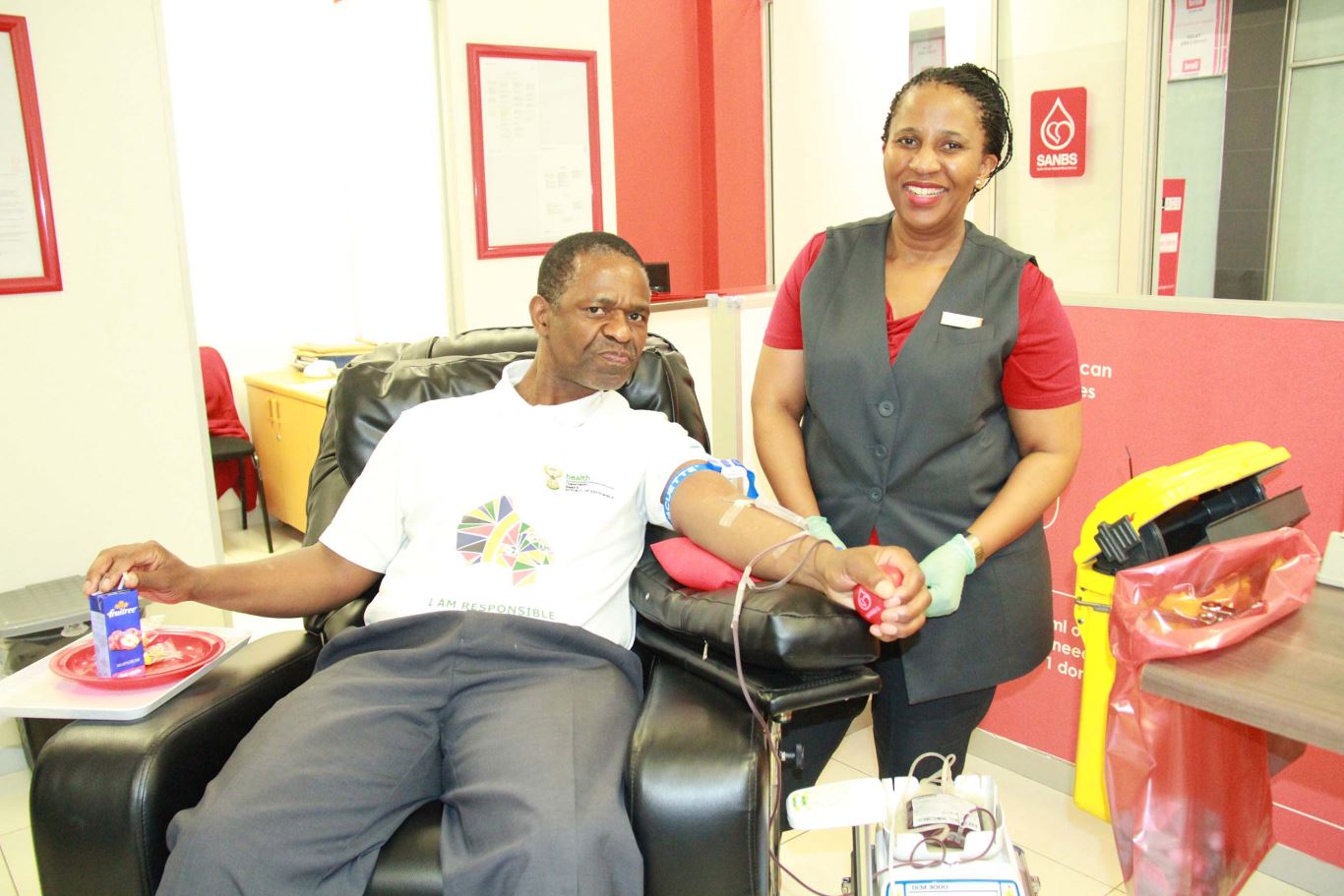
Every time a South African rolls up their sleeve to donate blood, there is usually one question that follows: If I donated my blood for free, why does someone have to pay for it?
The answer is more complicated than simply saying the South African National Blood Service (SANBS) “sells donated blood”.
The blood is donated for free — but getting it to a patient isn't
SANBS is a non-profit organisation, not a government department. It receives no direct government subsidy and funds its operations largely through fees charged for blood products and related services.
That means there is an important distinction between selling a donor's blood for profit and recovering the costs involved in turning a donation into a safe medical product.
After a person donates, the blood does not simply go straight from the donation chair to a patient.
SANBS collects the blood, transports it to laboratories, tests it for infections and determines its blood group. It then processes the donation, often separating it into red blood cells, plasma and platelets. The components are stored, distributed and eventually cross-matched before being given to a patient.
So what exactly are patients paying for?
The costs can include:
- Blood bags, needles and other medical equipment
- Donor screening and medical assessments
- Laboratory testing for transfusion-transmissible infections
- Processing and separating blood components
- Refrigerated storage
- Blood banks and specialist facilities
- Highly trained medical and laboratory staff
- Transport and logistics
- IT systems, research and quality-control processes
- Keeping blood available around the clock
SANBS says its blood supply is subject to extensive testing and safety procedures, with the organisation managing the blood transfusion chain from collection through to delivery.
SANBS doesn't pay donors
This is another important part of the system.
SANBS operates on the principle of voluntary, non-remunerated blood donation. Donors aren't supposed to receive financial payment for giving blood.
In fact, SANBS has previously pointed to the National Health Act, which prohibits a person who has donated blood or a blood product from receiving financial or other rewards for that donation.
So the donor gives blood without being paid, while SANBS charges healthcare providers for the service of collecting, testing, processing, storing and supplying blood products.
Who actually pays?
It depends on where the patient is being treated.
For patients receiving treatment in the public healthcare system, the Department of Health settles the relevant SANBS accounts.
For patients treated privately, the cost is generally handled through the hospital and medical scheme or other private healthcare arrangements.
SANBS says patients are not supposed to be denied a blood transfusion simply because of their financial circumstances.
SANBS currently publishes separate price lists for private patients and state patients, demonstrating that blood products and related services are charged within the healthcare system.
But isn't SANBS making money?
SANBS is a not-for-profit organisation, meaning its purpose isn't to distribute profits to shareholders.
That does not mean it cannot generate a surplus.
Its latest integrated report describes the organisation as operating under a cost-recovery model, with surpluses and reserves used to support its long-term sustainability. SANBS reported that it had approximately eight months of operating reserves following its 2025 financial year.
SANBS says financial sustainability is essential because it has to continue operating even when healthcare budgets are constrained or payments from government and medical schemes are delayed.
Why can't the government simply pay for everything?
That's ultimately a policy and funding question.
SANBS currently operates independently and says it receives no government subsidy. Its model therefore requires it to recover the costs of providing the service through the healthcare system.
The organisation also has thousands of employees, operates hundreds of facilities and supplies more than one million blood products annually.
Keeping that system running requires significant money.
The bigger picture
Perhaps the most important thing for donors to understand is this:
You are not donating Rands and cents. You are donating a biological product that SANBS then has to turn into a safe, usable medical treatment.
A single donation can be separated into different components, potentially helping as many as three patients. Red blood cells, platelets and plasma also have limited shelf lives, meaning SANBS must constantly collect, test, process, store and distribute new supplies.
So while it may look like SANBS is buying blood from donors for nothing and then selling it, that isn't how the organisation describes its model.
The blood is donated. The healthcare service surrounding that blood is charged for.
And that distinction is important when asking why a supposedly free blood donation can ultimately appear as a charge on a hospital or medical-aid bill.